How the United States and China Can Build a “Constructive Strategic Stability Relationship”
Geopolitics & Strategic Competition
May 22, 2026

Researcher
Introduction
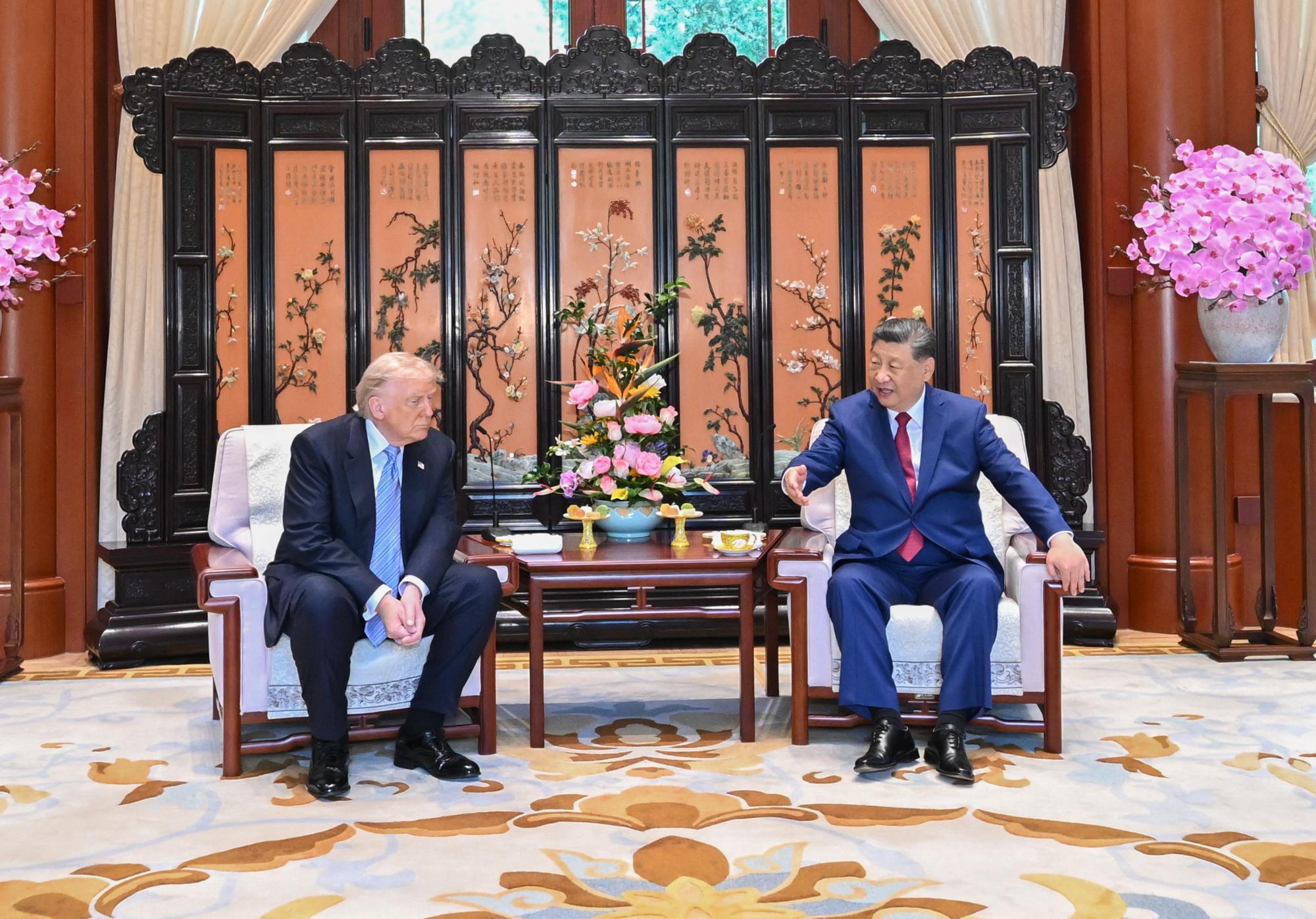
On May 13–14, 2026, the leaders of the United States and China met in Beijing and agreed to advance the establishment of a “constructive strategic stability relationship.” The articulation of this concept represents one of the most significant outcomes of the meeting. It not only provides a directional framework for the development of U.S.-China relations in the foreseeable future but also signals that, after multiple rounds of friction, both sides are forming a new strategic consensus on how to understand and manage their bilateral relationship.
For many years, the United States and China have been unable to reach a consensus on the overall positioning of their bilateral relationship. During the Obama administration, China proposed building a “new type of major-country relationship characterized by non-conflict, non-confrontation, mutual respect, and win-win cooperation,” but the U.S. response was limited. Subsequently, the Trump administration formally designated “strategic competition” as the core framework of U.S. policy toward China, a stance largely maintained by the Biden administration despite adjustments in specific policies. China, however, has consistently emphasized that competition cannot define the entirety of the U.S.-China relationship, nor can it serve as the sole logic guiding bilateral interactions. After multiple rounds of strategic engagement, both sides jointly proposed the concept of a “constructive strategic stability relationship” during this meeting. This marks the first substantive consensus on the positioning of the bilateral relationship and injects new positive expectations into U.S.-China relations.
The Strategic Significance of a New Bilateral Framework
The emergence of the concept of a “constructive strategic stability relationship” reflects an important evolution in the way both countries perceive their relationship. Rather than focusing exclusively on competition, the concept seeks to establish a framework that recognizes both rivalry and cooperation while emphasizing the management of strategic risks. As such, it represents an attempt to move beyond previous narratives that viewed U.S.-China relations primarily through the lens of strategic competition.
At a deeper level, the U.S. acceptance of the notion of “strategic stability” suggests a growing recognition among American policymakers that U.S.-China relations cannot be adequately explained solely by concepts such as zero-sum competition or strategic containment. As the world’s two largest economies and permanent members of the United Nations Security Council, the United States and China bear unique responsibilities in maintaining international stability and providing global public goods.
Three Dimensions of a Constructive Strategic Stability Relationship
Preventing Conflict and Preserving Peace
First, the concept emphasizes that the primary objective of U.S.-China relations should be the prevention of conflict and the preservation of peace. Traditionally, “strategic stability” referred to a stable relationship among nuclear powers designed to prevent war, particularly nuclear war. Over time, the concept expanded to encompass crisis management, arms competition, and the broader management of strategic interactions.
Applying this concept to U.S.-China relations reflects a shared understanding that the two countries must utilize institutionalized communication and risk-management mechanisms to prevent disagreements from escalating into confrontation and to ensure that crises remain under control.
Recognizing the Global Importance of U.S.-China Relations
Second, the concept reflects a renewed recognition of the global significance of U.S.-China relations. Strategic stability is a term with considerable geopolitical weight. Its application to bilateral relations demonstrates that both sides recognize that the trajectory of U.S.-China relations affects not only their respective national interests but also the stability of the international system, global economic development, and the evolution of major international and regional issues.
The stability of U.S.-China relations is therefore not merely a bilateral necessity but also a shared expectation of the broader international community.
Moving Beyond Passive Stability
Third, the inclusion of the term “constructive” gives the concept a more proactive and dynamic character. It suggests that the objective is not simply to avoid conflict or maintain a temporary détente following a summit meeting. Rather, it points toward a form of institutionalized stability that requires sustained effort and joint construction by both sides.
Such stability involves not only managing differences but also expanding areas of cooperation and accumulating positive experiences in fields such as trade, people-to-people exchanges, artificial intelligence governance, and global governance.
From Strategic Competition to Strategic Coexistence
The proposal of a “constructive strategic stability relationship” signals an effort to transcend a framework centered exclusively on strategic competition. While competition remains an important component of bilateral relations, it is no longer viewed as sufficient to capture the full complexity of the relationship.
The reality is that the United States and China simultaneously occupy multiple roles: strategic competitors, economic partners, major powers with global responsibilities, and key stakeholders in international governance. Consequently, the relationship cannot be reduced to a simple contest for geopolitical advantage. It must also account for the practical necessity of cooperation in addressing global challenges and maintaining international order.
Institutional Foundations for Strategic Stability
Expanding Economic Cooperation
For a constructive strategic stability relationship to become operational, political consensus at the leadership level must be translated into concrete outcomes. Economic cooperation represents one of the most important areas in which such progress can be achieved.
The United States and China have already agreed to establish a Trade Council and an Investment Council, with the aim of expanding mutually beneficial economic cooperation. Successful implementation of these initiatives could create new sources of stability and confidence in bilateral relations.
Deepening Cooperation in Traditional Areas
In addition to trade, both countries have expressed a willingness to deepen cooperation in areas such as narcotics control and people-to-people exchanges. These fields provide opportunities for visible, practical, and sustainable achievements that can strengthen positive momentum in bilateral relations.
More broadly, both sides should continue to expand dialogue, coordination, and crisis-management mechanisms in key sectors, thereby providing stronger institutional support for long-term stability.
Strengthening Crisis Management Mechanisms
Strategic stability ultimately depends on effective communication and risk management. Future efforts should therefore focus on improving military-to-military communication channels, enhancing diplomatic consultation mechanisms, and developing more robust procedures for crisis prevention and crisis response.
Institutionalized communication can help ensure that disagreements remain manageable and that unexpected incidents do not escalate into broader confrontations.
Emerging Opportunities in Global Governance
Artificial Intelligence Governance
Among the most promising areas for future cooperation is artificial intelligence governance. Track II dialogues on AI safety and risk governance have already generated a degree of policy convergence between the two countries.
Future cooperation could focus on military AI risk management, preventing misuse of AI by non-state actors, protecting critical infrastructure, and developing international standards for AI governance. If conditions become favorable, these efforts could eventually evolve into formal government-to-government mechanisms.
Addressing Shared Global Challenges
Beyond artificial intelligence, the United States and China possess significant opportunities for cooperation in addressing climate change, public health challenges, global supply-chain resilience, and other transnational issues.
Given the scale of their economic and political influence, meaningful cooperation between the two countries can produce positive spillover effects that benefit the broader international community.
Persistent Challenges to Strategic Stability
The Enduring Influence of Strategic Competition
Despite the positive implications of the new framework, significant obstacles remain. In the United States, viewing China as the primary strategic competitor continues to be a relatively stable bipartisan consensus.
This explains why many American commentators continue to evaluate U.S.-China interactions through a win-loss framework. Consequently, while the language of strategic stability may have gained acceptance, the fundamental logic underlying U.S. China policy has not undergone a fundamental transformation.
The Taiwan Question
Among the various sources of tension in bilateral relations, Taiwan remains the most sensitive issue. Although caution was generally maintained during the recent summit period, pro-Taiwan and China-hawk constituencies within the United States continue to exert pressure on policymakers.
Future U.S. arms sales to Taiwan and efforts to expand U.S.–Taiwan interactions will continue to have a direct impact on the stability of U.S.-China relations. Likewise, new China-related legislation or more confrontational policy measures could generate renewed tensions.
The Impact of Domestic Politics
The U.S. domestic political cycle, particularly the 2026 midterm elections, is likely to remain an important factor shaping policy toward China. As electoral competition intensifies, China-related issues may once again become instruments for political mobilization.
Although election outcomes are ultimately determined by domestic concerns, the “China factor” has become increasingly intertwined with a wide range of American political debates and may therefore return to the center of the political agenda.
Implications for the International Community
The significance of strategic stability between the United States and China extends far beyond bilateral relations. A stable relationship between the two countries can reduce uncertainty within the international system, moderate volatility in global markets, lower the risk of escalation in regional conflicts, and create greater space for international cooperation.
Whether in promoting global economic growth, maintaining supply-chain stability, addressing climate change, responding to public health emergencies, or advancing AI governance, stable U.S.-China relations generate benefits that extend to third countries and the international community as a whole.
From this perspective, strategic stability is not a zero-sum outcome in which one side wins and the other loses. Rather, it constitutes a mutually beneficial and broadly advantageous process that contributes to global public goods.
Conclusion
The concept of a “constructive strategic stability relationship” offers a new strategic lens through which to understand U.S.-China relations. It recognizes that competition and disagreement will remain enduring features of the relationship, while simultaneously emphasizing the importance of risk management, institutionalized communication, and pragmatic cooperation.
Looking ahead, President Xi Jinping’s planned visit to the United States later this year may provide an important opportunity to consolidate the momentum generated by recent leader-level diplomacy. If both sides continue to improve communication mechanisms, strengthen crisis-management arrangements, and achieve tangible progress in trade, people-to-people exchanges, and global governance, the foundation of a constructive strategic stability relationship will become increasingly robust.
For the United States and China, such a development would help guide bilateral relations toward a healthier, more stable, and more sustainable trajectory. For the world, it would contribute positively to international stability and provide renewed momentum for global governance cooperation in an era of growing uncertainty.
Related Reads for You
Discover more research and analysis on topics shaping the Indo-Pacific.