The U.S.–Iran Interim Ceasefire Agreement: Why the Negotiations Proved So Difficult
Geopolitics & Strategic Competition
Jun 22, 2026
Researcher

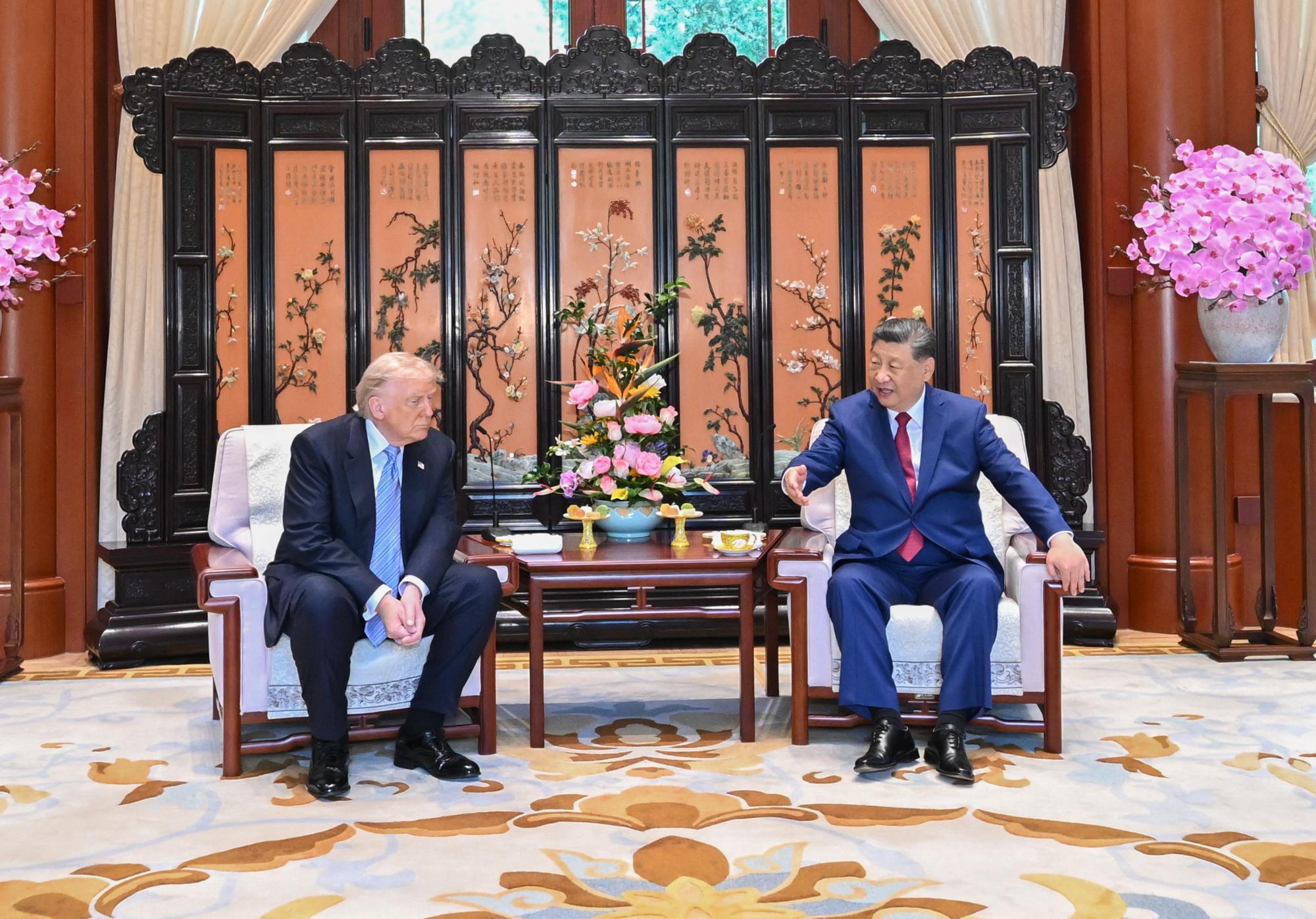
On 17 June, during the G7 summit, U.S. President Donald Trump signed an interim ceasefire agreement with Iran at the Palace of Versailles in France. Also described as a U.S.–Iran memorandum of understanding, the agreement committed both countries to pursuing a comprehensive peace settlement within the following 60 days. Its conclusion marked a substantive turning point after more than three months of military confrontation and diplomatic brinkmanship.
Nevertheless, negotiations had repeatedly come close to collapse during the preceding two months. Since the outbreak of the U.S.–Iran conflict in early 2026, Trump had publicly claimed on at least 37 occasions that the two sides were “close to an agreement.” On 23 March, he asserted that “nearly all the necessary points of consensus” were already in place. Following the April ceasefire, he predicted that an agreement would be finalized within two weeks. By late May, he was describing the negotiations as “essentially complete,” while in early June he maintained that only “two or three more days” were required.
Yet the final breakthrough remained persistently elusive. The principal reason was not a single disputed clause, but a set of structural contradictions generated by the interaction of domestic politics, military strategy, institutional fragmentation, and third-party intervention.
The United States: Deprofessionalized Diplomacy, Misaligned Objectives, and Opportunism
Deprofessionalized Diplomacy and the Disruptive Effects of Trumpian Negotiation
The negotiating model dominated by Trump constituted a systematic departure from the conventions of professional diplomacy. Traditional diplomatic practice depends heavily on confidentiality. Exploratory proposals, possible compromises, and the limits of each party’s concessions are generally discussed behind closed doors, thereby preventing premature public intervention and allowing negotiators to revise their positions without suffering an immediate loss of political credibility.
Trump, however, frequently bypassed the professional diplomatic apparatus and announced purported negotiating progress directly through social media posts and television interviews. In May 2026, only one day after U.S. representatives had delivered a revised draft agreement to Iran, Trump declared on social media that “Iran has accepted most of our demands,” even though Tehran had not yet issued a formal response.
The erosion of confidentiality deprived both parties of the political space necessary to adjust their positions without appearing to retreat. Each public prediction raised domestic expectations; when those expectations were subsequently disappointed, Trump faced mounting political pressure. This dynamic created a self-reinforcing cycle in which public commitments progressively elevated the minimum terms that Washington could politically afford to accept.
Trump’s much-vaunted “unpredictability” further undermined American credibility. By deliberately obscuring his intentions—simultaneously signaling an interest in negotiations while authorizing military strikes—he sought to place his adversaries under sustained psychological pressure. In practice, however, this approach weakened the reliability of U.S. commitments.
In late May 2026, on the eve of the planned signing of the memorandum of understanding, Trump abruptly demanded aboard Air Force One that Iran withdraw all of its forces from Syria. The condition had not been raised during the preceding months of negotiations. Iran subsequently cancelled the signing ceremony. The episode illustrated how the sudden introduction of new demands could nullify progress already achieved through formal diplomatic channels.
Misaligned Objectives: The MAGA Conception of “Winning” and the Non-Negotiability of Iran’s Nuclear Capabilities
A more fundamental obstacle lay in the incompatibility between American objectives and Iran’s political red lines. This divergence was partly rooted in the MAGA movement’s rigid demand for an unambiguous American “victory.” According to this victory-at-all-costs logic, the United States must emerge from every international interaction as the absolute and unmistakable winner; any agreement containing visible elements of compromise is consequently portrayed as a defeat.
For Trump’s political base, the Obama-era nuclear agreement symbolized American decline. The only acceptable definition of a “good agreement,” therefore, was one under which Iran completely abandoned its nuclear program.
After details of the draft U.S.–Iran memorandum were disclosed in late May 2026, MAGA-aligned Republicans launched an immediate public campaign against it. Republican Senator Lindsey Graham, a prominent foreign-policy hawk, denounced the proposed agreement on the grounds that it would “allow Iran to survive and give Hezbollah a shot in the arm.” He further warned that it would be “ten times worse than Obama’s 2015 agreement.”
The White House did not publicly repudiate Graham’s remarks, despite his close political relationship with Trump. This silence indicated that any agreement falling short of the complete dismantlement of Iran’s nuclear capabilities risked being pre-emptively rejected by Washington’s domestic political system.
Iran’s position was fundamentally incompatible with this demand. Tehran insisted on retaining the right to the peaceful use of nuclear energy, regarding that right as an essential component of national sovereignty and dignity. Within the Iranian political narrative, abandoning uranium enrichment would be tantamount to capitulation under foreign coercion. No Iranian government could accept such a concession without undermining its own political legitimacy.
Iran instead sought an agreement under which the United States would lift all nuclear-related sanctions and restore Iran’s access to international financial networks. In return, Tehran was prepared to restrict certain nuclear activities on a voluntary, reversible, and internationally monitored basis.
The achievement of the interim ceasefire in mid-June was therefore possible only because Washington temporarily circumvented this central impasse. At the tactical level, the United States set aside the rigid demand for Iran’s complete capitulation. It downgraded its immediate objective from the permanent elimination of Iranian nuclear capabilities to the suspension of military hostilities and the preservation of diplomatic channels. Washington also accepted, at least provisionally, Iran’s continued possession of ballistic-missile capabilities.
This recalibration was driven less by a genuine resolution of the underlying dispute than by mounting practical pressures. The cumulative costs of sustained military operations, persistently high domestic inflation, and the approaching U.S. midterm elections made an interim arrangement politically expedient.
Opportunism: How Military Superiority Undermined Negotiations
Although the United States possessed overwhelming military superiority, this advantage encouraged a form of strategic opportunism that ultimately damaged the negotiating process. The practice of “fighting while negotiating” became normalized. American policymakers appeared to believe that military pressure could be escalated at any time and without serious diplomatic consequences, leading them to treat military action as an auxiliary instrument of negotiation.
During the Geneva negotiations in April 2026, U.S. forces conducted air strikes against the Houthi movement in Yemen. Shortly before the Vienna consultations in early June, the United States attacked Islamic Revolutionary Guard Corps positions in eastern Syria. On 9 June, only one day after Trump announced that the parties were “very close” to an agreement, U.S. forces struck Iranian air-defence installations on Qeshm Island.
Following each operation, Trump argued that the demonstration of military strength would accelerate the negotiations.
The results were largely the opposite. Tehran interpreted the combination of negotiations and military attacks as evidence of deception and concluded that American commitments could not be trusted. Each military operation also strengthened the standing of Iranian hardliners, making compromise increasingly difficult to defend within Iran’s domestic political discourse.
This produced a destructive cycle. American military action provoked Iranian retaliation; Iran’s response persuaded Washington that additional pressure was necessary; the United States then launched further strikes, which intensified Iranian hostility and once again suspended diplomatic engagement. Rather than functioning as a catalyst for agreement, American military superiority became a structural impediment to its conclusion.
Iran: The Collapse of Trust and Internal Political Fragmentation
Historical Betrayal and the Difficulty of Rebuilding Trust
Iran’s recurrently uncompromising negotiating posture was rooted in its experience of what it regarded as American betrayal. In July 2015, Iran and the P5+1 concluded the Joint Comprehensive Plan of Action. The International Atomic Energy Agency subsequently confirmed on multiple occasions that Iran was complying with its obligations. In May 2018, however, Trump unilaterally withdrew the United States from the agreement and reinstated a policy of maximum-pressure sanctions.
Since then, whether confronted with the Biden administration’s stated willingness to return to the agreement or negotiations under Trump’s renewed presidency, Tehran has faced the same fundamental question: what mechanism could prevent Washington from reversing course once again?
The joint U.S.–Israeli bombing of Iranian nuclear facilities in June 2025 further destroyed the material foundations of trust. At the time of the strikes, the parties were engaged in confidential negotiations through Omani intermediaries, and a draft agreement was reportedly approaching completion. Nevertheless, U.S. and Israeli aircraft destroyed part of the centrifuge-assembly infrastructure at Natanz.
Iran’s Supreme National Security Council characterized this combination of negotiation and military attack as an “Anglo-Saxon form of negotiating deception.”
On 28 February 2026, only two days after the conclusion of the third round of negotiations, the United States launched a major military operation code-named “Epic Fury.” The attack resulted in the deaths of Iran’s then supreme leader, Ayatollah Ali Khamenei, and several senior military and political officials.
Iranian Foreign Ministry spokesperson Esmaeil Baghaei subsequently argued that the greatest obstacle to negotiations was the contradiction between Washington’s conduct “inside and outside the negotiating room.” Even after the memorandum of understanding had been concluded, distrust remained profound. When Trump expressed a willingness to meet Iran’s new supreme leader, Mojtaba Khamenei, senior military adviser Mohsen Rezaee rejected the proposal on the grounds that the necessary level of trust did not exist.
The restoration of mutual confidence will therefore be a protracted and exceptionally difficult process.
Internal Fragmentation: Divisions Between Hardliners and Pragmatists
Iran’s political system is not a unitary structure. It consists of a complex network encompassing the supreme leader, the Islamic Revolutionary Guard Corps, the clerical establishment, the elected presidency, and parliament. These institutions possess overlapping but frequently competing sources of authority.
Extreme hardliners represented by Islamic Revolutionary Guard Corps commander Ahmad Vahidi derive much of their influence from the so-called Axis of Resistance and the Quds Force network. Following Operation Epic Fury, their position became still more uncompromising. They argued that negotiations with the United States were inherently damaging to Iran’s national interests and that any concession to the “Great Satan” would amount to political surrender, thereby weakening the ideological legitimacy of the Islamic Republic.
Pragmatists associated with parliamentary speaker Mohammad Bagher Ghalibaf and Foreign Minister Abbas Araghchi focused instead on the devastating domestic consequences of the conflict. During six weeks of warfare, Iran reportedly suffered losses amounting to as much as US$270 billion—nearly equivalent to the country’s annual gross domestic product. The Iranian currency depreciated sharply, inflation became increasingly difficult to control, the purchasing power of the middle class deteriorated, and youth unemployment rose rapidly.
Moreover, instability in the Strait of Hormuz disrupted Iranian oil exports, which had become heavily dependent on a “shadow fleet” of vessels operating outside conventional trading networks. Pragmatic actors consequently concluded that only a diplomatic breakthrough capable of securing sanctions relief could prevent the irreversible erosion of Iran’s socioeconomic foundations and domestic stability.
These divisions directly affected the negotiating mandate. Any proposed agreement had to be submitted simultaneously to the Office of the Supreme Leader, the Islamic Revolutionary Guard Corps, and parliament’s national security committee. Because these institutions frequently adopted conflicting positions, draft agreements became subject to lengthy and unpredictable cycles of amendment.
Even after the interim ceasefire had been reached, hardline factions organized protests and accused the negotiating team of acting without Mojtaba Khamenei’s authorization. Sections of the public likewise called on the supreme leader to intervene and prevent the agreement from being implemented.
The X Factor: Israeli Disruption
Among all third-party actors, Israel played the most consequential role. Israel was not merely an observer but an autonomous and deeply involved participant. It regarded the possibility of a nuclear-armed Iran as an existential threat and remained firmly opposed to any substantial rapprochement between Washington and Tehran.
Israeli military operations repeatedly coincided with critical moments in the negotiations. In early April 2026, as an initial ceasefire agreement appeared close to completion, Israel launched extensive air strikes against Hezbollah positions in Lebanon and Iranian petrochemical facilities. On 1 June, as the draft memorandum of understanding began to emerge publicly, Israeli forces advanced deep into southern Lebanon toward the Litani River, prompting Iran to suspend negotiations.
On 7 June, Trump explicitly asked Israeli Prime Minister Benjamin Netanyahu to refrain from attacking Iran in response to missile strikes, in order to preserve a diplomatic opening. Israel nevertheless carried out air strikes on Iranian territory.
Even on 15 June, the day the United States and Iran announced that they had reached an agreement, Israeli forces continued operations in southern Lebanon and bombed Beirut’s Dahiyeh district only hours before the signing. Although Trump publicly condemned the action on social media, Netanyahu stated at a press conference later that evening that Israel did not regard itself as bound by the Lebanese provisions of the U.S.–Iran agreement and that the Israel Defense Forces would not withdraw from Lebanon.
According to The Jerusalem Post, Netanyahu had already communicated this position directly to Trump during a telephone conversation.
Israel’s intervention at each critical juncture was therefore unlikely to have been coincidental. Rather, it reflected a deliberate strategic effort to control the tempo of events and obstruct an agreement that Israel regarded as detrimental to its security interests. Given the special relationship between the United States and Israel, the Israeli government could reasonably assume that its disruptive actions would not produce a fundamental rupture in bilateral relations.
Even after the conclusion of the interim ceasefire, Israel retained the capacity to sustain low-intensity military friction, thereby increasing the political and strategic costs of the subsequent negotiations.
Conclusion
It is important to emphasize that the agreement signed on 17 June was essentially an interim ceasefire arrangement rather than a comprehensive peace settlement. The principal disputes—including Iran’s right to enrich uranium, the scope and sequencing of sanctions relief, and possible restrictions on Iran’s regional influence—remained substantively unresolved.
The 60-day negotiating window will pass rapidly. Whether Washington and Tehran can overcome their structural differences during this period remains highly uncertain. The central obstacles are deeply embedded in the domestic political systems, strategic doctrines, and historical experiences of both countries. They are further complicated by Israel’s capacity and willingness to disrupt the diplomatic process.
The current opening may represent the beginning of a genuine peace process. Equally, however, it may prove to be no more than a temporary interval before the resumption of hostilities. The ultimate significance of the ceasefire will depend not on the symbolic achievement of its signing, but on whether the parties can transform a short-term suspension of violence into a durable institutional framework for conflict management.
Related Reads for You
Discover more research and analysis on topics shaping the Indo-Pacific.