Compound Crisis and Global Reverberations: The Spillover Effects of the U.S.–Iran Conflict
Geopolitics & Strategic Competition
Mar 17, 2026

Researcher
Introduction
Following the joint U.S.–Israeli strikes on Iran on February 28, 2026, Tehran responded by launching missiles and drones toward Israel and several Gulf states hosting U.S. military assets. Explosions were subsequently reported in cities such as Dubai and Doha. From the outset, the conflict exceeded the boundaries of a narrowly defined bilateral confrontation. It rapidly evolved into a compound crisis implicating Gulf security, regional diplomacy, international energy markets, shipping routes, and global inflation expectations.
On February 28, United Nations Secretary-General António Guterres called for an “immediate cessation of hostilities” and urged all parties to de-escalate, warning that failure to contain the crisis could lead to a broader regional conflict with “serious consequences.” On March 5, China’s Ministry of Foreign Affairs similarly stated that a prolonged and escalating conflict served no party’s interests, emphasizing that political and diplomatic settlement remained the only viable path forward.
The spillover effects of the U.S.–Iran conflict are now unfolding along a chain that links domestic political and economic pressures in the belligerent states, heightened geopolitical instability across the Middle East, and global transmission through energy, shipping, insurance, and capital markets. These pressures, in turn, are beginning to constrain the policy choices available to all major actors.
The war is no longer simply a Middle Eastern security crisis. The risk of disruption in the Strait of Hormuz, rerouting of shipping, reassessment of insurance risk, and interruption of air traffic are rapidly feeding into national debates over inflation, growth, fiscal capacity, and electoral politics. As a result, the conflict has become a shared variable in global economic and political decision-making.
Security Shock: The Regionalization of Middle Eastern Geopolitical Risk
The Gulf region contains a dense concentration of U.S. military bases, global energy export infrastructure, and critical maritime chokepoints. It is also home to major aviation, financial, and logistics hubs, including Dubai, Doha, and Abu Dhabi. For precisely this reason, once the war moved beyond Iranian and Israeli territory, Gulf states found it increasingly difficult to maintain the position that they were politically unwilling to participate while geographically able to remain outside the conflict.
I. Gulf States as “Passive Belligerents”: The Multi-Point Expansion of Asymmetric Threats
The most immediate reason Gulf states have been drawn into the conflict lies in the inseparability of U.S. military basing and domestic security. According to an Associated Press report on March 6, since the outbreak of the conflict Iran has launched at least 380 missiles and more than 1,480 drones toward five Arab Gulf states, killing at least 13 people. Six U.S. soldiers stationed in Kuwait were also killed when a port operations center came under drone attack. Gulf officials cited in the report stated that their governments had long feared spillover from the war, but had received neither sufficient warning nor protective support commensurate with the risks they faced.
On March 9, Jamal Jama Al Musharakh, the United Arab Emirates’ representative to the United Nations in Geneva, told Reuters that the UAE’s position remained “de-escalation, de-escalation, de-escalation.” He also made clear that UAE bases would not be used to launch attacks on Iran. The UAE has reportedly suffered more than 1,400 missile and drone attacks, resulting in four civilian deaths and 114 injuries, while desalination and energy facilities have also been affected. Similarly, by March 3, Qatar reported that its territory had been struck by three cruise missiles, 101 ballistic missiles, and 39 drones. What Gulf states now face is not an abstract security concern, but a simultaneous crisis of urban governance, civilian infrastructure, and national credibility.
The risks are no longer confined to the areas surrounding military bases. They are spreading toward civilian infrastructure and key regional economic nodes. On March 11, two drones crashed near Dubai International Airport, injuring four people. Although airport operations were not fully suspended, the incident once again shook confidence in one of the world’s busiest international aviation hubs. Dubai, Abu Dhabi, and Doha had already experienced significant disruption due to airspace closures or strict flight restrictions.
The energy dimension is even more consequential. According to Reuters on March 10, roughly 1.9 million barrels per day of refining capacity across the Gulf had been shut down as a result of the war, affecting Bahrain, Iraq, Kuwait, Qatar, Saudi Arabia, and the UAE. Abu Dhabi National Oil Company reportedly closed the Ruwais refinery after a drone attack caused a fire. The conflict is therefore transforming the Gulf’s military-security problem into a broader systemic risk for critical infrastructure.
Against this backdrop, Gulf diplomatic messaging is particularly significant. At a special Arab League meeting on March 9, the UAE Foreign Ministry stated that the countries attacked “are not parties to the current armed conflict” and had not permitted their territory, airspace, or waters to be used for attacks on Iran. On March 10, a spokesperson for Qatar’s Foreign Ministry said Doha would seek to further strengthen defense cooperation with the United States, arguing that deterrence alone was insufficient to absorb the practical consequences of an uncontrolled escalation.
Taken together, these signals show that Gulf states are primarily seeking to detach their homelands from the logic of the battlefield. Yet the reality is that as long as military bases, energy assets, and transportation hubs remain concentrated in the Gulf, these states cannot truly return to a position outside the war. Gulf countries, particularly those hosting U.S. military facilities, have become direct objects of Iran’s asymmetric threat strategy and have been pushed to the front line of regional security turbulence.
II. The Levant and Mesopotamia: Reactivated Fronts and Humanitarian Escalation
The Levant and Mesopotamian theaters reveal a compound picture of reactivated front lines, fragmented armed activity, and rapidly expanding humanitarian consequences. Lebanon is the most visible example.
According to Reuters on March 10, after Hezbollah resumed rocket and drone attacks against Israel on March 2, the Israeli military expanded its airstrikes across southern Lebanon, the Bekaa Valley, and Beirut. Within one week, 486 people were killed and 1,313 wounded, while more than 667,000 people were displaced. By March 11, Lebanese figures suggested that the death toll was approaching 600 and that roughly 700,000 people had lost their homes. UNICEF stated on March 10 that “nearly 700,000 people” in Lebanon had been forced to leave their homes, including approximately 200,000 children, and called on all parties to protect schools, shelters, and other civilian facilities.
The conflict on the Lebanese front is thus beginning to generate national-level displacement, urban sheltering pressures, and strains on public services. The consequences are no longer limited to border villages or military targets. They are now visible in demographic movement, municipal governance, humanitarian relief, and the erosion of basic civilian security.
In the Mesopotamian theater, the so-called “axis of resistance” has not entered into a coordinated general mobilization. Instead, its members have engaged in limited, scattered harassment. According to a Reuters exclusive report on March 6, Iran-backed Shiite militias in Iraq have so far launched relatively few attacks. Even traditionally hardline groups, including Kata’ib Hezbollah and Harakat al-Nujaba, have not fully committed to large-scale operations.
Militia members, Iraqi and Western officials, Shiite clerics, and regional observers have offered several explanations. First, other Iran-aligned armed groups have been weakened in recent years. Second, the collapse of the Assad government damaged Syria’s role as a supply and training corridor. Third, some militia commanders have become deeply embedded in Iraq’s domestic political and economic networks and are therefore reluctant to gamble everything on a highly uncertain regional war. Nevertheless, this does not mean the risk has disappeared. If Shiite communities or holy sites suffer major attacks, more groups could still be drawn back into the conflict.
The situation in Iraq is better understood as a low-intensity but highly uncertain pattern of disruption. On March 7, the U.S. embassy in Baghdad was targeted by Katyusha rockets. Although there were no U.S. casualties, the attack indicated that the target set was expanding from military facilities to diplomatic sites. On March 11, a U.S. diplomatic support facility in Baghdad was struck by a drone. The Levant-Mesopotamian region has not yet become a new main battlefield, but it is gradually sliding into a more unpredictable peripheral war zone. Attacks may remain limited in scale, but their targets are increasingly dispersed, attribution is increasingly ambiguous, and diplomatic, commercial, and public-security environments remain persistently unstable.
Domestic Pressures in the Belligerent States: The Bill Arrives Before the Victory
The direct consequences of the conflict are not limited to physical destruction. The war is also reshaping the domestic political and economic trajectories of the three principal actors. Rising military expenditures, intensified social mobilization, and internal power transitions are turning battlefield confrontation into long-term systemic pressure at home.
I. The United States: Fiscal Overstretch and Inflation Expectations as Dual Political-Economic Tests
The domestic pressure generated by the conflict has quickly appeared at the level most visible to ordinary households: fuel prices. According to AAA data from March 10, within one week of escalation, the average U.S. price for regular gasoline had risen to $3.539 per gallon, an increase of roughly 13.8 percent. The average price of diesel rose to $4.780 per gallon, an increase of approximately 22.8 percent.
Diesel is especially important because it affects more than household transportation. It directly shapes the operating costs of freight, agriculture, manufacturing, and industrial activity. According to Reuters on March 10, analysts widely regarded diesel as the petroleum product most structurally exposed to the Middle East conflict. Its price increase is likely to feed rapidly into transport costs, food prices, and everyday consumer spending. For the White House and Congress, the cost of war will first be reflected on gasoline price boards and in the inflation expectations behind them.
Political pressure has risen at the same time, quickly affecting public opinion and electoral calculations. In an exclusive Reuters interview on March 5, Trump stated that he was not worried about rising oil prices, saying that “if they go up, they go up,” and describing short-term price increases as an acceptable cost of achieving security objectives. Yet only days later, the White House was reportedly assessing multiple options to lower oil prices, including releasing oil from the Strategic Petroleum Reserve, limiting certain exports, and adjusting federal taxes and fees. This indicates that the administration had, in fact, begun to feel the political weight of fuel prices.
Polling has also translated price anxiety into political risk. According to an Ipsos poll on March 1, only 27 percent of respondents supported the use of force against Iran, while 43 percent opposed it outright. Another 56 percent believed that Trump was “too inclined” to use force to advance U.S. interests. A March 9 poll showed that support for the military operation remained only 29 percent, while 67 percent of Americans expected gasoline prices to continue rising over the next year, and 60 percent expected the United States to become involved in Iran for an extended period. For a president who campaigned on lowering the cost of living, the war is pulling what might otherwise be treated as a foreign-policy and national-security issue back into the realm of household budgets and midterm electoral calculations.
Tensions are also accumulating in Congress and at the macroeconomic policy level. On March 10, six Democratic senators called for open hearings and demanded that senior officials, including the secretary of defense and secretary of state, testify under oath. They indicated that if Republicans obstructed the process, they might use procedural tools to disrupt the normal operations of the Senate. However, demands for votes related to the War Powers Act have so far been suppressed by Republican majorities in both chambers.
According to Reuters, senators who received classified briefings still believed that the administration had not adequately explained the cost, duration, or potential risk of ground involvement in the war. Some congressional aides expected the White House to request additional war funding, possibly around $50 billion. Although the issue of fiscal overstretch has not yet fully materialized in formal budget legislation, an institutional struggle over supplemental appropriations, authorization boundaries, and war aims has already begun.
Even more significantly, on March 3, New York Federal Reserve President John Williams publicly warned that the conflict could feed back into the U.S. economy through falling asset prices, trade shocks affecting allies, and higher inflation. In the short term, it could generate the dual pressure of “pushing up inflation and slowing growth.” The United States is certainly better positioned than many energy-importing countries to absorb conventional oil and gas shocks. But relative resilience does not mean insulation from the costs of war. As long as Gulf shipping remains disrupted and energy-risk premiums remain elevated, the interaction among prices, investment, and policy expectations will ultimately feed back into U.S. growth prospects, fiscal planning, and monetary policy.
II. Israel: Wartime Controls Push Economic Pressure onto the Fiscal Authority and Central Bank
In Israel, wartime controls have translated social pressure into measurable economic losses, directly compressing the policy space available to fiscal and monetary authorities. According to estimates by Israel’s Finance Ministry, when the Home Front Command maintains the highest-level “red” restrictions—including school closures, limits on nonessential travel and work, and large-scale reserve mobilization—the Israeli economy loses approximately 9.4 billion shekels per week, or about $2.93 billion. The Finance Ministry has therefore advocated lowering restrictions to a less stringent “orange” level, which would reduce weekly losses to roughly 4.3 billion shekels.
In fact, Israeli authorities had already incorporated financial risks into their decision-making before the war began. In an official statement on February 23, the Bank of Israel noted that its Monetary Committee had unanimously decided to keep the benchmark interest rate unchanged at 4 percent. One important reason was the renewed rise in “geopolitical uncertainty.” The statement also emphasized that renewed inflationary risks, supply-demand constraints, fiscal developments, and the fact that the 2026 national budget had not yet been approved all meant that conditions were not yet sufficient for a rate cut.
By March 9, minutes released by Israel’s Monetary Committee showed that the institution had already expressed concern in late February about the possibility of military conflict with Iran. Once the war actually began, rising defense spending, uncertainty over fiscal arrangements, and restrictions on economic activity transformed what had previously been an anticipated risk into immediate pressure.
At the same time, according to a March 2 announcement by the Bank of Israel, the banking supervisory authority had required commercial banks to introduce minimum relief measures, including deferred repayments and fee reductions, in order to ease the financial burden on households and businesses affected by the war. The wartime shock in Israel is therefore no longer simply a defense issue. It has entered the governance agendas of monetary policy, fiscal sustainability, and banking-system stability.
Politically, the war has reduced partisan noise in the short term, but it has not eliminated the possibility of later accountability. According to Reuters on February 28, opposition leader Yair Lapid expressed support for the strike on Iran on the first day of the war, calling it “a just war.” This suggests that, under conditions of sharply heightened security threat, Israeli politics experienced a form of wartime consensus. Yet such consensus is better understood as a temporary political consolidation than as an unlimited exemption from scrutiny over the long-term costs of war.
As schools remain closed, reservists are withdrawn from civilian production, firms suffer operating losses, and fiscal pressure rises, the longer the war continues, the more likely previously suppressed debates over executive responsibility, economic governance, and policy choices will return to the center of domestic politics. Netanyahu himself acknowledged on March 3 that the war against Iran “may take some time,” though he said it would not last for years. In practice, however, the domestic bill for the war has already arrived before the military outcome, and it is being borne by the Finance Ministry, the central bank, and Israeli society as a whole.
III. Iran: Accelerated Succession and the Tightening of Wartime Control
A series of decapitation operations targeting Iran’s Supreme Leader Ali Khamenei and other senior political and military figures forced Tehran to complete a sudden and involuntary transfer of power. State governance has subsequently become even more concentrated around the security apparatus. According to Iranian state television on March 9, after the death of Supreme Leader Ali Khamenei, Iranian authorities announced that his son, Mojtaba Khamenei, would succeed him as supreme leader. The appointment was formally made by the Assembly of Experts, but the Islamic Revolutionary Guard Corps played a decisive role in consolidating the choice. Although some pragmatic figures and clerics expressed reservations, they were unable to prevent the outcome.
Reuters, citing several senior Iranian sources, reported that the succession arrangement signaled not compromise for the sake of de-escalation, but a priority on regime continuity and the preservation of a hardline orientation. The report cited Alex Vatanka of the Middle East Institute as saying that Mojtaba “owes this position to the Revolutionary Guards.” This suggests that the weight of the security establishment in major Iranian decision-making is likely to continue rising. Iran’s leadership transition has formally achieved continuity, but the institutional center of gravity behind that transition is moving further toward the Revolutionary Guards and the security system.
Immediate social reactions also demonstrate the war’s impact on ordinary citizens’ sense of security and daily order. On February 28, the day the war began, residents in Tehran and other cities began leaving urban areas, lining up for gasoline, stockpiling food, and making emergency arrangements for school closures. Iran’s highest national security body simultaneously advised residents in some areas to “go to other cities if possible,” while schools and universities were closed “until further notice.”
By March 3, the streets of Tehran had become nearly deserted. Checkpoints and Revolutionary Guard patrols filled streets and alleys. Residents reported intermittent electricity, water, and internet access, and worried that airstrikes could expand into problems of public order, healthcare access, and basic living conditions. According to Reuters, one interviewee said that “there are checkpoints on every street and in every alley,” while another woman stated, “we are stockpiling food.” Although U.S. and Israeli planners had reportedly hoped that strikes might trigger internal uprising, Reuters interviews found no signs of an imminent large-scale anti-government mobilization inside Iran.
Iran’s already fragile economic position has been hit even harder by the war. On January 27, one month before the outbreak of hostilities, the Iranian rial had already fallen to a historic low of 1.5 million rials to the U.S. dollar, depreciating by roughly 5 percent that month. According to data released by Iran’s central bank on February 27, the average consumer inflation rate for the twelve months ending February 19 had risen to 46.3 percent. Protests over the cost of living from late 2025 to early 2026 were described by Reuters as the most severe domestic unrest since the 1979 revolution.
After the war began, these pressures quickly moved from macroeconomic indicators into concrete market behavior. Residents in Tehran and elsewhere engaged in concentrated purchases of food, fuel, and generators, exchanged money into foreign currency, queued for gasoline, and attempted to leave major cities. According to Reuters, many interviewees reported road congestion, difficulty withdrawing cash, and interruptions to electricity and water supply. Everyday consumption and savings decisions thus shifted toward a much stronger “risk-avoidance” logic.
Changes in financial confidence were equally striking. According to Chainalysis and Elliptic data, more than $2 million flowed out of Iranian cryptocurrency exchanges in the first hour after the U.S.–Israeli strikes, with cumulative outflows reaching approximately $10.3 million by March 2. This outflow signaled an early pattern of wartime capital flight. Reuters also reported on March 10 that Israeli strikes on March 7 against oil depots and refineries around Tehran had produced large clouds of black smoke and environmental risks, increasing the possibility of further disruption to domestic fuel distribution and urban operations.
Compared with the United States or Israel, Iran has far less room to maneuver in external financing, exchange-rate stabilization, and inflation management. As a result, the economic shock caused by war is less easily buffered through international financial channels or external markets. It is instead reflected more quickly in household consumption, currency confidence, and the basic order of supply. For this reason, the war’s domestic impact on Iran is not merely a reaffirmation of hardline policy after leadership succession. It is also a wartime reorganization that binds political control, social order, and economic stability more tightly together.
Global Market Resonance: Energy, Shipping, and Capital Under Stress
Beyond intensifying geopolitical risk, the global spillover of the U.S.–Iran conflict is first visible in the synchronized volatility of prices, freight rates, insurance premiums, and expectations. Through the framework of inflation, interest rates, and growth, markets and policymakers around the world are rapidly repricing risk. Investors and governments are not merely concerned about a one-day spike in oil prices. They are worried that if high-risk conditions persist, energy-price volatility will penetrate monetary policy, corporate earnings, and global growth expectations.
I. Energy: From Disruption Expectations to Global Inflationary Pressure
Markets are now facing more than the psychological expectation that energy supplies “might” be disrupted. Risks have risen simultaneously across transport routes, production capacity, and export channels. During trading on March 9, oil prices briefly surged by 29 percent, with Brent crude touching $119.50 per barrel intraday, its highest level since 2022. Although prices surrendered some gains by the close, they still ended the day about 7 percent higher. On March 10, oil prices subsequently fell by about 11 percent in a single day amid inflation concerns and reports that the United States and other G7 countries were considering releasing strategic petroleum reserves.
The supply-side contraction is real and extends across oilfields, refineries, and export terminals. It is not merely a sentimental risk premium. According to Reuters, Iraq has cut crude production by nearly 1.5 million barrels per day and warned that reductions could expand if exports remain obstructed and storage capacity approaches its limits. Kuwait also announced production cuts over the weekend. Saudi Arabia redirected more crude exports through the Red Sea and lowered output from 10.9 million barrels per day in February to roughly 9.8 million barrels per day. The Associated Press reported on March 9 that the war had put some of the Persian Gulf’s most important pipelines, terminals, and refining facilities at risk. Even if the conflict later eases, the restoration of production and logistics may not occur simultaneously.
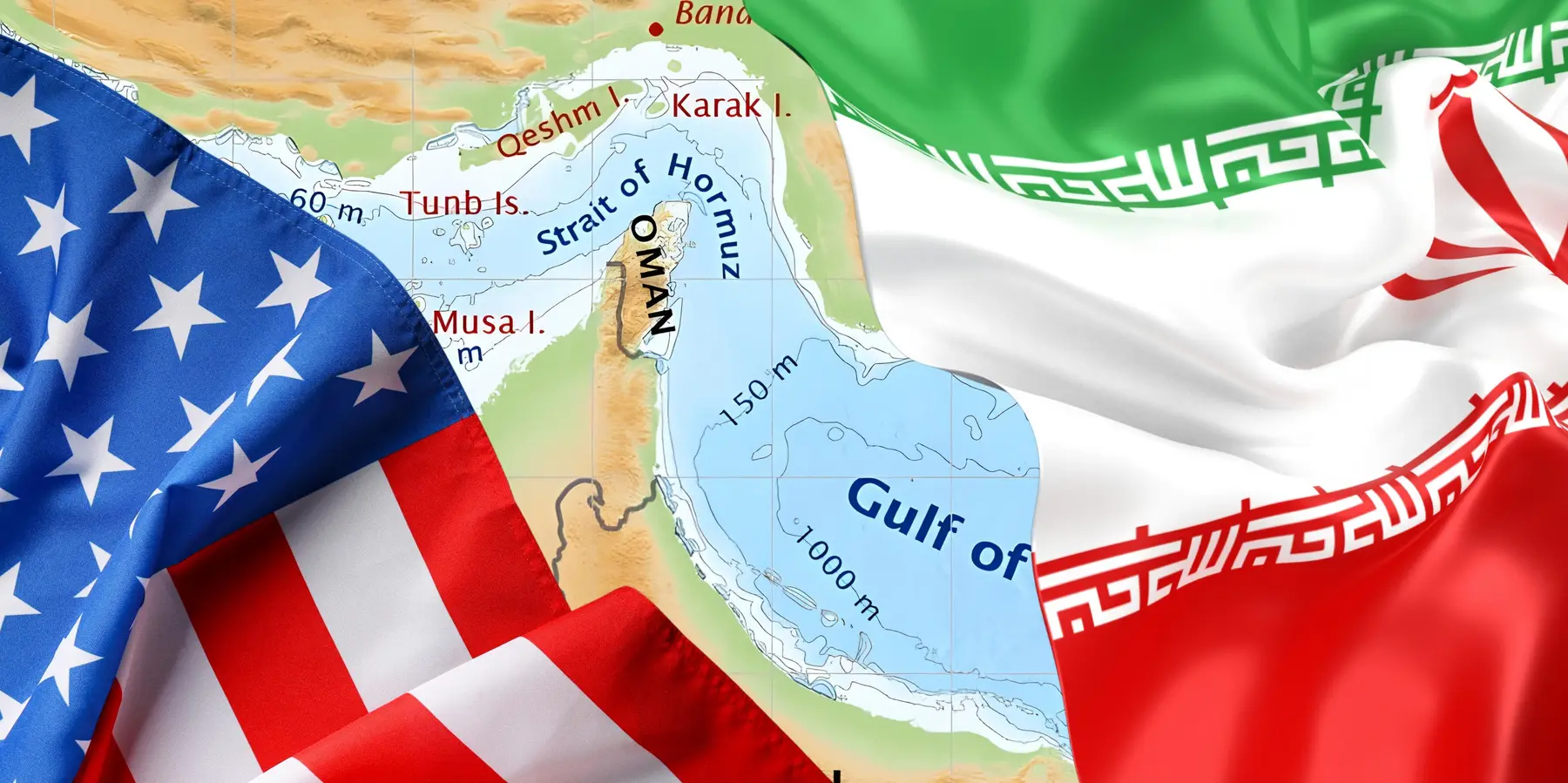
The structural importance of the Strait of Hormuz rapidly transforms this regional disruption into a global inflation problem. According to data released by the U.S. Energy Information Administration in June 2025, an average of about 20 million barrels per day of crude oil and condensate transited the Strait of Hormuz in 2024, equivalent to roughly 20 percent of global petroleum liquids consumption. Around 20 percent of global LNG trade also passed through the Strait in the same year. Approximately 84 percent of crude oil and condensate flows and 83 percent of LNG flows ultimately went to Asian markets.
According to the International Energy Agency’s February 2026 assessment, Hormuz accounts for about 25 percent of global seaborne oil trade, while alternative pipeline capacity amounts to only 3.5 million to 5.5 million barrels per day. Since the outbreak of hostilities on February 28, shipping activity through the Strait has reportedly fallen by around 97 percent. As long as this passage remains almost frozen, the shock will not be confined to Gulf oil producers. It will spread through import costs, refining margins, industrial input prices, and final consumer prices, transmitting inflationary pressure to Asia and the wider global economy.
The global economic significance of the conflict now extends beyond commodity markets. On March 5, Goldman Sachs estimated that if oil prices temporarily rose to $100 per barrel and remained there for a period, global growth could be reduced by 0.4 percentage points. Reuters reported on March 11 that the oil-price surge had already narrowed the room for rate cuts by emerging-market central banks. On the same day, Morgan Stanley estimated that if an oil-price increase of 25 percent driven by supply shocks persisted for four quarters, global real GDP could fall by roughly 1.5 percent. Energy is not only the most visible price interface of geopolitical conflict. It is also the shortest transmission channel through which a local war becomes a global problem of inflation, interest rates, and growth.
II. Shipping and Insurance: Freight Rates, War-Risk Premiums, and Reinsurance Enter the War Narrative
Shipping and insurance constitute the second major channel through which the conflict’s spillover effects are transmitted globally. According to UNCTAD’s Review of Maritime Transport 2025, the Strait of Hormuz accounts for roughly 11 percent of global seaborne trade and around 25 percent of global seaborne oil trade. A disruption in Hormuz affects not only Gulf crude exports, but also broader flows of commodities, chemical feedstocks, and logistics chains. By March 4, more than 200 vessels were reportedly waiting around the Strait of Hormuz, including oil tankers and LNG carriers. Commercial vessels had also suffered damage, crew casualties, and navigation interruptions in surrounding waters.
Risk pricing quickly appeared in insurance markets. Reuters reported on March 6 that after the war expanded, some marine war-risk insurance quotes rose severalfold within a short period. For individual voyages, additional war-risk premiums were more than 1,000 percent higher than before the war. In the case of hull war insurance, rates reportedly rose from around 0.25 percent before the war to 3 percent. For an oil tanker valued at $250 million, this would increase the single-voyage premium from about $625,000 to $7.5 million. Reuters also cited Marsh and Aon as saying that current quotations had generally entered the range of 1 to 1.5 percent of vessel value, with rates negotiated voyage by voyage according to ship type and whether the vessel was located east of Hormuz.
Risk premiums do not remain inside insurance contracts. They spread through freight rates, fuel costs, and landed prices. Reuters reported on March 11 that, due to disruptions in Middle Eastern fuel-oil transport, bunker fuel spot prices in Singapore—the world’s largest ship-refueling port—had more than doubled since February 28. Mainstream low-sulfur fuel prices rose above $1,000 per metric ton, with premiums generally exceeding $200. Ports such as Shanghai, Ningbo-Zhoushan, and Singapore have also begun to experience more visible anchorage delays and refueling queues. These added costs will ultimately be transmitted through the landed prices of crude oil, refined products, chemicals, and bulk cargo, becoming part of global imported inflation.
Yet the commercial insurance market cannot absorb war risk at this level on its own. Government credit has therefore been drawn into the shipping narrative. On March 3, Trump requested that the U.S. International Development Finance Corporation provide political-risk insurance and financial guarantees for Gulf maritime trade, and stated that the U.S. military could escort oil tankers if necessary. In an official announcement on March 6, the DFC further explained that the reinsurance arrangement would provide rolling coverage for up to approximately $20 billion in losses, initially focusing on hull and cargo insurance.
As of March 11, however, this form of “sovereign reinsurance” remained more of an expectation-management tool than a solution capable of rapidly restoring normal navigation. Although Trump repeatedly stated publicly that the United States was prepared to provide escorts, the U.S. Navy reportedly told industry participants that current attack risks remained too high to provide routine escorts for commercial vessels. Insurance, reinsurance, and naval escort can reduce panic and prevent the immediate collapse of trade chains to some extent. But as long as strike risks and miscalculation risks along Hormuz do not clearly decline, commercial shipping will find it difficult to return to its prewar rhythm.
III. Capital Markets: Safe-Haven Flows, Rate-Hike Trades, and the Pricing of Stagflation Risk
While energy and shipping markets respond to direct disruption and physical risk, capital markets are pricing the possibility that the coming months—or even longer—will be defined by a combination of more expensive energy, weaker growth, and higher interest rates. On March 9, amid surging oil prices and escalating Middle Eastern tensions, the pan-European STOXX 600 index closed down 0.6 percent and briefly touched a more than two-month low during the session. It had already fallen nearly 6 percent from its February 27 record closing level. Europe’s “fear index,” the V2TX, briefly rose to its highest point since April of the previous year. By March 10, European equities rebounded sharply as oil prices retreated and hopes for easing increased. Yet markets had not returned to a state in which the risk had been removed. Instead, they were repeatedly revising expectations regarding energy, growth, and interest-rate trajectories under conditions of high volatility.
Bond and interest-rate markets have also significantly affected investment and financing risk. According to Reuters on March 9, as oil prices surged, money markets at one point priced in at least one European Central Bank rate hike during the year and briefly considered the possibility of two hikes. On March 11, markets still assigned a probability of more than 50 percent to an ECB rate hike by year-end. In an official interview on March 3, ECB chief economist Philip Lane stated clearly that if the Middle East conflict generated sustained disruption to energy supply, the eurozone could face “a significant increase in energy-driven inflation and a significant decline in output.” Bundesbank President Joachim Nagel also warned on March 11 that if more expensive fuel began to translate into broader and more persistent consumer inflation, the ECB would act “quickly and decisively.”
Governments are already preparing policy responses around household energy spending and basic consumption. On March 11, the European Commission publicly stated that it was studying subsidies or price caps for natural gas in order to prevent energy costs from spreading further into household electricity and heating bills. On the same day, British Chancellor Rachel Reeves said that most British households were currently protected by regulated energy prices until July. However, if the government sought to keep household energy bills at current levels, the fiscal cost over the next two years could reach £9 billion. Deutsche Bank estimated that, absent intervention, higher energy prices could raise UK inflation by an additional one percentage point and reduce economic output by nearly 0.5 percent.
In Asia, the shock has already reached the kitchen and dining table more directly. According to Reuters, India raised the price of a 14.2-kilogram household LPG cylinder by 7 percent to 913 rupees. The government then launched emergency measures to prioritize natural gas supplies for household users and transport fuels, while reducing some industrial and commercial uses. The current repricing of capital markets is therefore not simply about a short-term correction in risk assets. It is about reassessing the extent to which higher oil and gas prices will raise heating, cooking, transportation, and borrowing costs, forcing governments and central banks to make new tradeoffs among price stability, growth support, and fiscal discipline.
Conclusion
In sum, the trajectory of this conflict has made clear that the core contest among the parties is no longer confined to battlefield outcomes. It is increasingly becoming a test of domestic governance costs and economic endurance. High military expenditures, rising inflation expectations, sustained economic losses, and the restructuring of internal security orders all make it difficult for traditional military “decisiveness” to translate easily into strategic success.
Volatility in energy markets, disruptions to logistics chains, and the rapid growth of humanitarian pressure are shifting the international response toward the management of spillover crises. The central issue is no longer simply whether one side can achieve tactical advantage. It is whether the conflict can be prevented from generating cascading failures across energy supply, maritime commerce, financial markets, and domestic political systems.
Looking ahead, this compound crisis may enter a prolonged and highly contested phase. Military deterrence, energy-price stabilization, maritime protection, and diplomatic mediation are now deeply intertwined. Whether the relevant actors can cool the situation and stabilize the broader environment before costs spiral out of control and strategic resources are exhausted will determine who retains the initiative in the next stage of regional and global geopolitical competition.
Related Reads for You
Discover more research and analysis on topics shaping the Indo-Pacific.