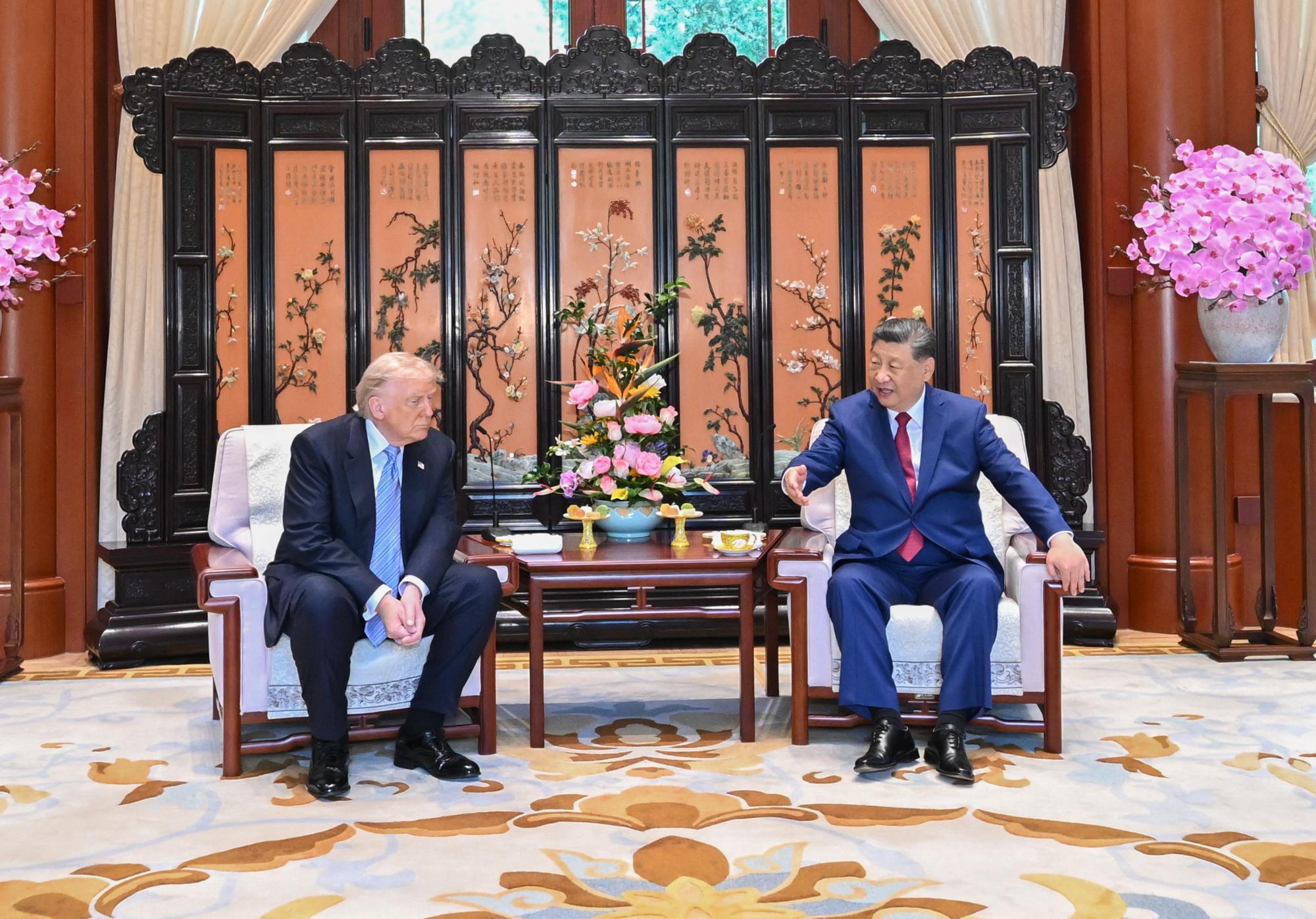
Trump’s April Visit to China and the Trajectory of U.S.–China Strategic Competition
Geopolitics & Strategic Competition
Mar 10, 2026

Researcher
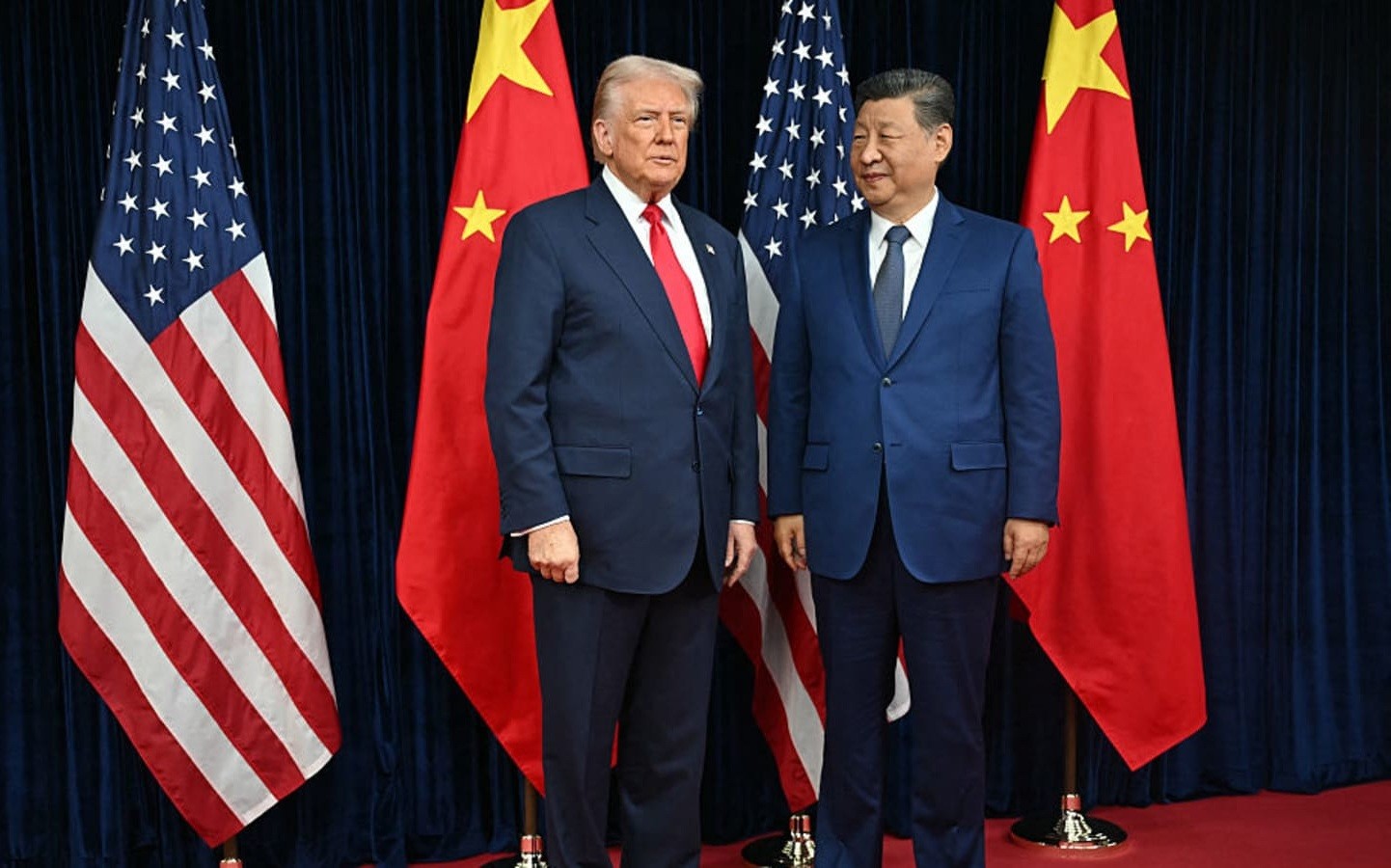
Executive Summary
President Donald Trump’s planned April visit to China should be understood within the broader trajectory of U.S.–China relations: intensifying strategic competition managed through selective and transactional diplomatic engagement. The visit is unlikely to produce a major strategic reset. Rather, it reflects the increasingly familiar pattern of U.S.–China interaction, in which both sides continue to compete across military, technological, economic, and geopolitical domains while using leader-level diplomacy to manage risks and preserve limited channels of cooperation.
The current relationship is defined by contradiction. On one hand, rivalry continues to deepen. The United States is seeking to reduce dependence on Chinese supply chains, constrain China’s access to advanced technologies, and reinforce its Indo-Pacific alliance network. China, meanwhile, is attempting to expand its regional influence, strengthen its technological self-sufficiency, and resist what it views as U.S.-led containment. On the other hand, both governments recognize that unmanaged confrontation would carry severe costs. This makes periodic high-level diplomacy necessary, even when neither side expects a fundamental improvement in relations.
Recent leader-level communication, including the February 2026 Trump–Xi call, suggests that both Washington and Beijing are willing to engage tactically on selected issues. These include critical minerals, agricultural trade, Taiwan, counternarcotics, strategic stability, and broader regional security. However, the scope of potential cooperation remains narrow. Any agreements reached during the summit are likely to be limited, transactional, and designed to stabilize immediate tensions rather than resolve underlying disputes.
In this sense, the April summit should be viewed less as a turning point than as a pressure-management mechanism. It may produce positive optics, limited trade commitments, working groups, or renewed dialogue channels. But the structural drivers of competition—military modernization, technology rivalry, supply-chain security, ideological distrust, and competing regional strategies—will remain intact.
Strategic Context
The United States and China have entered a phase of sustained structural competition. This competition is no longer limited to trade disputes or isolated diplomatic frictions. It now spans economic models, technological ecosystems, military planning, supply chains, global governance, and influence in key regions such as the Indo-Pacific, the Middle East, Latin America, and Africa.
For Beijing, foreign policy is closely linked to domestic legitimacy and long-term national development. Chinese leaders view technological upgrading, energy security, military modernization, and regional influence as essential to national rejuvenation. From Beijing’s perspective, U.S. export controls, alliance coordination, Taiwan-related signaling, and supply-chain diversification all appear to form part of a broader containment strategy. This perception shapes China’s negotiating posture. Beijing may seek tactical compromise, but it is unlikely to accept arrangements that it believes would permanently constrain its rise.
For Washington, the strategic picture is more complicated. The Trump administration continues to emphasize economic leverage, trade balances, industrial policy, and burden-sharing with allies. However, U.S. objectives toward China are not always clearly defined. Some elements of U.S. policy aim to compete with China over technology and security. Others seek transactional economic deals, including agricultural purchases, tariff adjustments, and market access. This creates uncertainty before the summit, because Beijing may find it difficult to determine whether Washington’s priority is strategic containment, economic bargaining, or short-term political gains.
Despite these uncertainties, diplomacy remains necessary. The two countries remain deeply interconnected, even as both attempt to reduce vulnerabilities. China still plays a major role in global manufacturing, rare earth processing, batteries, pharmaceuticals, and consumer goods. The United States remains central to advanced technology, finance, agricultural exports, and global security networks. Complete decoupling is neither feasible nor cost-free. As a result, both sides are likely to continue pursuing a dual approach: reducing dependence in sensitive sectors while maintaining engagement where mutual interests remain.
The planned summit therefore reflects a broader reality: U.S.–China competition is becoming more institutionalized, but both sides still need mechanisms to manage escalation. Leader-level meetings cannot reverse the strategic trajectory, but they can clarify red lines, stabilize expectations, and produce narrow agreements that reduce immediate pressure.
Key Issue Areas
I. Taiwan
Taiwan remains the central flashpoint in U.S.–China relations and will almost certainly be one of the most sensitive issues surrounding the summit. For Beijing, Taiwan is not simply a foreign policy issue. It is tied to sovereignty, regime legitimacy, nationalism, and the Chinese Communist Party’s long-term historical narrative. Any perceived movement toward Taiwanese independence or deeper U.S.–Taiwan security integration is viewed as a direct challenge to China’s core interests.
China’s position is likely to remain firm. Beijing views U.S. signaling on Taiwan as inconsistent and increasingly destabilizing. On one hand, Washington maintains that it does not support Taiwanese independence. On the other hand, it continues arms sales, military training, high-level political contacts, and security coordination with Taipei. From China’s perspective, this combination appears designed to strengthen Taiwan’s resistance capacity while avoiding an explicit U.S. commitment. Beijing is likely to pressure Trump to reaffirm limits on U.S.–Taiwan engagement and to avoid actions that China interprets as encouraging separatism.
The U.S. approach will likely remain centered on strategic ambiguity. Washington will continue arms sales and security assistance while avoiding an explicit guarantee to defend Taiwan under all circumstances. This ambiguity gives the United States flexibility. It helps deter Beijing by leaving open the possibility of U.S. intervention, while also discouraging Taiwan from assuming unconditional American support. For Trump, ambiguity also preserves bargaining space. It allows Taiwan to remain both a security commitment and a negotiating variable within broader U.S.–China interactions.
The risks, however, remain significant. A Taiwan contingency is still a low-probability but high-impact scenario. Even if neither side seeks war, miscalculation could occur through military exercises, maritime incidents, airspace encounters, or political signaling. China also remains vulnerable to supply disruptions in energy and food during a major conflict, especially if maritime routes become contested. This vulnerability may restrain Beijing, but it could also encourage China to build pressure before a crisis in order to shape the political environment.
The summit is unlikely to produce a breakthrough on Taiwan. The most likely outcome is a restatement of existing positions, possibly accompanied by private reassurances or crisis-management understandings. Both sides may seek to avoid public confrontation on the issue, but Taiwan will remain the most dangerous long-term flashpoint in the relationship.
II. Trade and Agriculture
Trade is the area most likely to produce tangible summit outcomes. Unlike Taiwan or strategic stability, trade issues can be translated into measurable commitments, such as tariff reductions, purchase agreements, market access measures, or sector-specific exemptions. For Trump, trade also carries strong domestic political value. A deal involving agricultural exports could be presented as a concrete win for American farmers and rural constituencies.
U.S. agricultural exports to China have declined significantly since 2019, and China remains a critical market for American producers. Soybeans are likely to be central to negotiations. In previous rounds of U.S.–China bargaining, agricultural purchases played an important role because they allowed both sides to claim success without resolving deeper structural disputes. Washington could argue that it had secured benefits for American farmers, while Beijing could treat purchases as a flexible economic concession rather than a strategic compromise.
A possible summit outcome could involve a limited agreement linking tariff reductions or tariff suspensions to renewed Chinese agricultural purchases. Such an arrangement would fit Trump’s transactional style. It would provide immediate political benefits, reduce pressure on U.S. exporters, and create positive optics around the summit. China may also find such a deal acceptable if it helps stabilize relations without requiring concessions on core strategic issues.
However, trade agreements of this kind have clear limits. They do not resolve disputes over industrial subsidies, technology controls, market access, overcapacity, intellectual property, or supply-chain security. Nor do they eliminate the broader U.S. effort to reduce dependence on Chinese manufacturing in strategic sectors. Therefore, even if the summit produces an agricultural or tariff package, it should be understood as a tactical stabilization measure rather than a comprehensive trade settlement.
Trade may also be linked to counternarcotics cooperation. Washington could use tariff relief or selective economic concessions to encourage stronger Chinese action on precursor chemicals associated with fentanyl production. Beijing, in turn, may use cooperation in this area to seek relief from U.S. pressure on other fronts. This kind of issue linkage is likely to be a recurring feature of Trump’s China diplomacy.
III. Critical Minerals and Technology
Critical minerals and technology are among the most important structural issues in U.S.–China competition. The relationship is marked by deep interdependence, but also growing distrust. The United States depends heavily on China for rare earth processing, batteries, active pharmaceutical ingredients, and refined materials. China, meanwhile, continues to depend on foreign sources for certain advanced technologies, aerospace components, semiconductor-related equipment, and high-end machinery.
This interdependence creates both vulnerability and leverage. China can use its dominance in rare earths and refined materials to signal economic pressure, while the United States can use export controls and investment restrictions to limit China’s access to advanced technology. Both sides understand that these dependencies cannot be eliminated quickly. As a result, each is trying to buy time: maintaining access in the short term while investing in domestic capacity, alternative suppliers, and allied supply-chain networks.
For Washington, critical minerals are no longer just a commercial issue. They are central to defense production, clean energy, electric vehicles, semiconductors, and advanced manufacturing. A disruption in rare earths or battery materials could affect both civilian industries and military readiness. This explains why the United States is likely to raise critical minerals during the summit, either as a direct negotiating issue or as part of a broader discussion about supply-chain stability.
For Beijing, technology controls are a major source of concern. China sees U.S. restrictions on semiconductors, artificial intelligence, and high-end equipment as an attempt to slow its technological rise. Beijing may seek assurances that Washington will not further tighten restrictions, but the Trump administration is unlikely to offer broad concessions in this area. At most, the two sides may discuss narrow exemptions, licensing flexibility, or temporary arrangements designed to prevent immediate disruption.
The likely summit outcome is therefore limited. Both sides may agree to maintain communication on supply-chain stability, avoid sudden disruptions, or create technical working groups. But the deeper trend remains unchanged: the United States and China will continue reducing strategic vulnerabilities while using selective interdependence as leverage.
IV. Counternarcotics
Fentanyl remains a key domestic issue for Washington and is likely to feature prominently in the summit agenda. The Trump administration has strong political incentives to demonstrate progress on counternarcotics, particularly given the domestic impact of opioid-related deaths and public concern over border security.
The U.S. priority is stricter Chinese control over precursor chemicals. Washington argues that chemical producers and suppliers in China play a role in the supply chains that ultimately feed fentanyl production. From the U.S. perspective, stronger regulation, enforcement, information-sharing, and penalties against suppliers could help reduce the flow of precursors into illicit networks.
China frames the issue differently. Beijing argues that the fentanyl crisis is driven primarily by U.S. domestic demand and failures in American drug-control policy. It may be willing to cooperate selectively, but it resists being portrayed as responsible for America’s opioid crisis. This difference in framing limits the scope of possible cooperation.
The most likely outcome is symbolic or incremental. The two sides may announce renewed working-level cooperation, information-sharing mechanisms, or specific enforcement actions against identified chemical suppliers. Such steps would give Washington a political deliverable and allow Beijing to show goodwill without accepting broad responsibility.
However, major breakthroughs are unlikely. Fentanyl supply chains are adaptive, transnational, and difficult to disrupt. Even if China tightens controls, production networks can shift to other countries or use alternative chemical routes. Counternarcotics cooperation can reduce friction, but it will not transform the broader U.S.–China relationship.
V. Nuclear and Strategic Stability
Nuclear and strategic stability issues are becoming more prominent as existing arms control frameworks weaken. The expiration of U.S.–Russia arms control agreements has revived discussions about whether China should be included in broader nuclear arrangements. Washington increasingly argues that China’s expanding nuclear capabilities make it necessary to discuss trilateral arms control or at least transparency mechanisms.
China rejects this framing. Beijing points out that its nuclear arsenal remains smaller than those of the United States and Russia. It argues that it should not be expected to join arms control arrangements designed around much larger nuclear powers. From China’s perspective, U.S. calls for trilateral arms control may be intended to constrain China’s modernization before it reaches a more secure deterrent posture.
The summit may include discussion of strategic stability, but expectations should be low. Formal arms control agreements are unlikely. The most realistic outcome would be limited dialogue on transparency, risk reduction, crisis communication, or nuclear doctrine. Even these discussions may remain preliminary.
Still, the issue matters because strategic mistrust is growing. U.S.–China military competition increasingly includes not only conventional forces but also space, cyber, missile defense, hypersonic systems, and nuclear modernization. Without communication mechanisms, the risk of miscalculation could increase during a crisis over Taiwan, the South China Sea, or the East China Sea.
Therefore, even limited discussion of strategic stability would be useful. It would not resolve the problem, but it could create channels for future crisis management.
VI. Iran and the Middle East
The Middle East has emerged as an additional strategic layer ahead of the summit. Although U.S.–China competition is often discussed through the Indo-Pacific lens, developments in the Middle East increasingly influence both countries’ bargaining positions. China relies heavily on Gulf energy supplies, including Iranian oil, and remains sensitive to disruptions in regional energy flows.
U.S. actions in Iran and Venezuela signal both military capability and strategic leverage. By demonstrating a willingness to use coercive tools in energy-producing regions, Washington may seek to remind Beijing that China’s energy security remains exposed to geopolitical disruption. This does not mean the United States would directly threaten Chinese energy supplies, but the broader implication is clear: China’s global economic position depends on stable access to resources and maritime routes that remain vulnerable to U.S. influence.
This creates an indirect bargaining dimension. Issues outside the Indo-Pacific—such as sanctions on Iran, energy flows from the Gulf, instability in Venezuela, and maritime security—can affect U.S.–China negotiations. Beijing may seek assurances that Washington will not destabilize key energy markets, while Washington may use China’s energy vulnerability as implicit leverage in broader discussions.
The Middle East also complicates China’s claim to be a purely regional actor in U.S.–China competition. As China’s global economic footprint expands, its interests become more exposed to crises far from East Asia. This gives the United States more points of pressure, but also raises the risk that disputes in one region could spill into another.
The summit is unlikely to produce a major agreement on Iran or Middle East security. However, these issues may shape the background atmosphere of the talks and influence how each side evaluates its leverage.
Summit Outlook
The upcoming Trump–Xi meeting should be viewed primarily as a stabilization mechanism rather than a strategic turning point. Both leaders have incentives to produce positive optics. Trump may want to show that he can extract concrete economic concessions from China, while Xi may want to demonstrate that Beijing can manage relations with Washington from a position of confidence.
Limited agreements may emerge in trade, tariffs, agriculture, and counternarcotics. These are the areas where transactional bargaining is most feasible. A package involving soybean purchases, partial tariff relief, renewed fentanyl cooperation, or working-level dialogue would allow both sides to present the summit as productive.
However, structural competition will remain unchanged. Military modernization, Taiwan, technology controls, supply-chain security, critical minerals, and geopolitical influence cannot be resolved through a single summit. Even if the meeting lowers tensions temporarily, both sides will continue preparing for long-term competition.
The summit may therefore produce a carefully managed public narrative. Both sides could emphasize mutual respect, constructive dialogue, and practical cooperation. They may avoid public disagreement on Taiwan while privately restating red lines. They may announce mechanisms for continued engagement without committing to major policy shifts.
This kind of outcome would be consistent with the broader pattern of U.S.–China relations: competition continues, but both governments seek to prevent it from becoming uncontrollable.
Conclusion
The planned Trump–Xi summit reflects a consistent pattern in U.S.–China relations: escalating competition managed through targeted engagement. Neither side expects the meeting to transform the relationship. Instead, the summit offers a platform to reduce immediate friction, negotiate selective economic outcomes, and clarify positions on sensitive issues.
Despite possible areas of cooperation, the underlying rivalry remains intact. The United States will continue seeking to reduce dependence on Chinese supply chains, constrain China’s access to strategic technologies, and reinforce its alliance networks. China will continue pursuing technological self-sufficiency, regional influence, military modernization, and resistance to U.S. pressure.
The most likely result is tactical stabilization without strategic reconciliation. Trade and counternarcotics may provide limited deliverables. Taiwan, technology, and strategic stability will remain unresolved. Critical minerals and supply chains will continue to be areas of both dependence and leverage. Middle East and energy dynamics will add another layer of complexity to the bargaining environment.
Ultimately, the trajectory of U.S.–China relations will depend less on individual summits than on whether both sides can manage competition without crossing into destabilizing confrontation. The April visit may help stabilize the relationship temporarily, but it will not change the long-term direction of rivalry. The central challenge for both Washington and Beijing is not to eliminate competition, but to prevent it from becoming unmanageable.
Related Reads for You
Discover more research and analysis on topics shaping the Indo-Pacific.