Takaichi’s Snap Election, China Balancing, and U.S.–Japan Strategic Outcomes
Geopolitics & Strategic Competition
Feb 13, 2026

Researcher
Overview
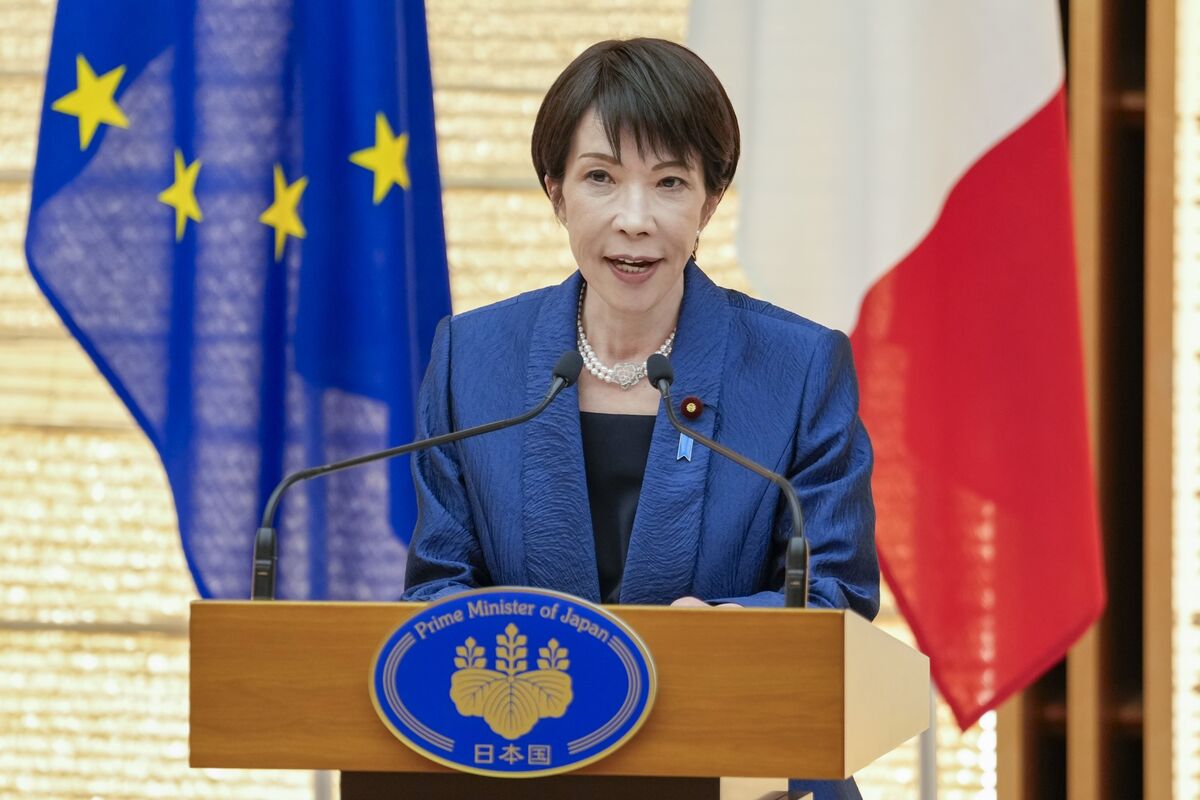
Prime Minister Sanae Takaichi’s decision to call a snap general election on February 8 proved to be a calculated and ultimately effective political move. Having been in office for only three months, Takaichi moved quickly to seek a direct electoral mandate before domestic opposition, intra-party resistance, or external pressure from China could constrain her leadership. The timing of the election suggested that she intended to convert early political momentum into institutional authority, allowing her to govern from a stronger position during a period of heightened regional uncertainty.
Her victory has significantly strengthened her standing in the Diet and within the Liberal Democratic Party. By securing renewed public backing, Takaichi has reduced the ability of internal rivals to challenge her policy agenda and has gained greater room to shape Japan’s national security and foreign policy trajectory. The result is especially important because her leadership had previously faced pressure following controversy over her November 2025 Taiwan-related remarks and allegations concerning irregular campaign donations.
The election also demonstrated Takaichi’s ability to appeal to younger voters and communicate a clearer political message around leadership, security, and national resilience. This gives her government a stronger claim to public legitimacy at a time when Japan faces an increasingly complex external environment, including Chinese military activity near Japan’s periphery, economic coercion, and uncertainty over how a Taiwan contingency might affect Japan’s own security.
Overall, the election should be understood not merely as a domestic political event, but as a turning point that may influence Japan’s defense posture, its approach to China, and its expectations of the U.S.–Japan alliance in 2026 and beyond.
Domestic Implications
The election result gives Takaichi greater political space to advance key policy priorities, particularly in defense spending, economic security, and institutional reforms related to Japan’s evolving national security strategy. These areas had already become central to Japan’s policy debate, but a stronger electoral mandate allows the administration to argue that its agenda reflects public support rather than the preferences of a narrow security elite.
This matters because many of Japan’s planned reforms require sustained political capital. Expanding defense spending, improving crisis-response capabilities, strengthening supply-chain resilience, and revising security-related institutions all require coordination across ministries, the ruling party, coalition partners, and the bureaucracy. Without a strong mandate, these efforts could be slowed by political caution or intra-party disagreement. Takaichi’s victory reduces that risk.
The election also helps stabilize her leadership after a politically difficult period. Her earlier Taiwan-related remarks triggered strong criticism from Beijing and created diplomatic pressure on Tokyo. At the same time, allegations involving campaign finance irregularities raised questions about her domestic vulnerability. By winning the election, Takaichi has partially neutralized these pressures. She can now present herself as a leader who withstood both external pressure and domestic scrutiny.
However, this does not mean she has unlimited freedom. Japanese public opinion remains cautious about the possibility of direct confrontation with China. Many voters may support stronger defense capabilities, but they may not support unnecessary escalation or rhetoric that appears to pull Japan too directly into a regional crisis. Therefore, Takaichi’s challenge will be to use her mandate carefully: advancing defense and economic security policies while avoiding the impression that Japan is moving recklessly toward confrontation.
In this sense, the election strengthens Takaichi’s authority, but it also raises expectations. She will now be judged on whether she can translate political momentum into concrete governance outcomes, particularly in the areas of national security, economic resilience, and alliance management.
Foreign Policy Direction
Takaichi’s government is likely to continue pursuing a dual-track foreign policy: maintaining a proactive defense posture while emphasizing the need for stable relations through dialogue. This approach reflects Japan’s current strategic dilemma. On one hand, Tokyo increasingly sees China’s military activity, economic coercion, and Taiwan-related pressure as direct challenges to Japan’s security environment. On the other hand, Japan cannot afford an uncontrolled deterioration in relations with China, given the depth of bilateral economic ties and the risks of regional escalation.
Although the election was not explicitly framed as a China-focused referendum, the broader strategic environment almost certainly shaped its timing and political meaning. Sustained Chinese pressure following Takaichi’s Taiwan remarks, combined with continuing Chinese activity in the East China Sea, reinforced the perception that Japan requires stronger and more stable leadership. The election therefore allowed Takaichi to link domestic political authority with the need for strategic preparedness.
Looking ahead, Japan is expected to revise three core security documents in 2026: the National Security Strategy, the National Defense Strategy, and the Defense Buildup Program. These revisions will be highly consequential. They may clarify Japan’s understanding of regional threats, define the scope of future defense investments, and further institutionalize the idea that Japan must prepare for contingencies beyond the direct defense of its own territory.
With electoral constraints reduced, these revisions are likely to proceed more smoothly. Takaichi’s stronger mandate may make it easier for her administration to push through politically sensitive changes, including expanded defense investment, improved operational readiness, and closer coordination with the United States and other partners. At the same time, the government will likely avoid presenting these moves as purely anti-China measures. Instead, Tokyo may frame them as necessary steps to preserve regional stability, deter coercion, and protect Japan’s national interests.
This careful framing will be important. Japan wants to strengthen deterrence without giving China an easy justification for further pressure. As a result, Takaichi’s foreign policy is likely to be assertive in substance but measured in presentation.
Implications for China–Japan Relations
Beijing’s official response to Takaichi’s election victory has been cautious. Rather than directly commenting on the electoral result, Chinese officials have continued to emphasize historical grievances and urge Japan to reflect on its wartime past. This response reflects Beijing’s broader strategy: avoiding a direct endorsement or rejection of Japan’s domestic political outcome while continuing to frame Japan’s security shift through the lens of history and regional mistrust.
China’s earlier pressure campaign following Takaichi’s Taiwan remarks appears to have produced mixed results. Beijing likely intended to weaken Takaichi’s position by raising the economic and diplomatic costs of her statements. However, the pressure may have had the opposite effect. Rather than forcing her to retreat, it appears to have contributed to domestic support for her leadership, especially among voters who favor a firmer Japanese stance toward China.
This illustrates a recurring problem with economic and diplomatic coercion. While such pressure can impose short-term costs, it can also strengthen nationalist sentiment, harden public opinion, and reinforce the political position of leaders who present themselves as defending national sovereignty. In Japan’s case, Chinese pressure may have made Takaichi’s argument more persuasive: that Japan faces a more difficult security environment and requires stronger leadership.
Two competing interpretations now emerge regarding the future direction of China–Japan relations.
The first view is that Takaichi’s strengthened position may encourage Beijing to stabilize relations. If Chinese leaders conclude that she is likely to remain in office and cannot be easily pressured into retreat, they may decide that continued escalation would be counterproductive. Under this scenario, China could seek a limited diplomatic reset, reduce the intensity of economic pressure, and preserve space for dialogue on trade, tourism, and crisis management.
The second view is that Takaichi’s victory may lead Beijing to intensify pressure. If China interprets her electoral success as evidence that Japan is moving more firmly toward a hawkish security posture, Beijing may respond with stronger economic measures, more frequent military signaling, or sharper diplomatic criticism. This could create a cycle in which Japanese firmness and Chinese coercion reinforce one another.
Both scenarios remain plausible. Much will depend on how Takaichi uses her mandate, how China evaluates the costs of further pressure, and whether the United States encourages restraint, deterrence, or a combination of both.
Strategic and Economic Considerations
A stronger Japanese leadership may enable expanded defense investment, particularly in the Southwest Islands. These islands are strategically important because of their proximity to Taiwan and the East China Sea. Any Taiwan contingency or major regional crisis would likely place this area under significant pressure. Improving infrastructure, logistics, surveillance, missile defense, and rapid deployment capabilities in this region will therefore remain a major priority for Tokyo.
Takaichi’s mandate may also accelerate reforms aimed at improving Japan’s ability to respond to regional contingencies. These reforms could include stronger coordination between the Self-Defense Forces and civilian authorities, better integration with U.S. forces, and improvements in command-and-control systems. The broader objective would be to ensure that Japan can respond more effectively to gray-zone pressure, maritime incidents, missile threats, or a wider regional crisis.
Such moves will influence China’s strategic calculus. If Beijing believes Japan is becoming more capable and better integrated with U.S. regional planning, it may become more cautious about escalation. However, the opposite is also possible. China may view Japan’s defense buildup as evidence of containment and respond with additional military activity or economic pressure. This is why Japan’s strategy must balance deterrence with careful signaling.
At the same time, Japan faces significant economic constraints. China remains one of Japan’s largest trading partners, with bilateral trade exceeding $300 billion annually. This economic interdependence limits how far Tokyo can go in decoupling from China. Continued tensions, combined with possible restrictions on dual-use goods, rare earths, or other strategic materials, could weigh on Japan’s economic outlook.
These risks are especially important given Japan’s existing economic challenges, including currency weakness, public debt, and the need to sustain industrial competitiveness. A more assertive security posture may be strategically necessary, but it also carries economic costs. Japanese companies with exposure to the Chinese market may become more cautious, and supply-chain restructuring will require time, investment, and government support.
Despite these tensions, incentives for stabilization remain. China faces its own domestic economic pressures and may not want a prolonged deterioration in relations with Japan. Japan, meanwhile, has no interest in a complete economic rupture with China. Therefore, the relationship is likely to remain complex and fluid rather than simply moving in a straight line toward confrontation.
U.S.–Japan Alliance Dynamics
Takaichi’s electoral victory is unlikely to fundamentally alter the U.S.–Japan alliance, but it may reshape how the partnership operates. A stronger mandate allows Tokyo to pursue defense and economic security initiatives with greater confidence and to engage Washington from a more politically secure position. This could give Japan more leverage in alliance discussions, especially on issues such as burden-sharing, defense planning, and Taiwan-related contingencies.
One key issue remains U.S. ambiguity regarding Taiwan. Washington has provided significant military support to Taiwan and continues to emphasize the importance of peace and stability in the Taiwan Strait. However, the United States has avoided making explicit commitments about how it would respond in a Taiwan contingency. This ambiguity is designed to preserve flexibility, but it also creates uncertainty for Japan.
For Tokyo, this uncertainty matters because a Taiwan crisis could directly affect Japanese security. U.S. bases in Japan would likely play an important role in any regional contingency. Japan’s southwestern islands, maritime routes, and airspace could also become involved. Therefore, Japan has a strong interest in understanding how Washington would act, what role Japan would be expected to play, and how alliance coordination would function under crisis conditions.
Takaichi’s stronger political position may encourage her government to seek clearer expectations from Washington. This does not necessarily mean demanding a public U.S. commitment to defend Taiwan. Rather, Japan may push for more detailed private coordination, clearer contingency planning, and stronger mechanisms for rapid decision-making between the two governments.
A notable potential shift lies in the evolving “division of labor” within the alliance. Traditionally, the U.S.–Japan alliance has been described as a “shield and spear” arrangement, with Japan serving as the defensive shield and the United States providing offensive strike capabilities. However, Japan’s acquisition of longer-range strike capabilities signals that this framework is changing.
Japan is not replacing the United States as the alliance’s main offensive power, but it is moving toward a more integrated deterrence posture. This raises important legal, constitutional, and political questions inside Japan. How far can Japan go in developing counterstrike capabilities? Under what conditions could these capabilities be used? How would they be coordinated with U.S. forces? These questions are likely to become more prominent in 2026.
Alliance Expectations and Strategic Coordination
With increased political authority, Takaichi may push for greater clarity from Washington on alliance commitments, particularly regarding Taiwan and regional contingencies. Japan will likely seek reassurance that the United States remains fully committed to the defense of Japan and to maintaining regional stability. At the same time, Tokyo may also want more predictable coordination on how both sides would respond to Chinese pressure below the threshold of armed conflict.
This is particularly important because China’s pressure is often calibrated and ambiguous. Economic coercion, maritime activity, air patrols, cyber pressure, and diplomatic threats may not individually trigger a formal alliance response, but together they can change the strategic environment. Japan may therefore seek broader alliance coordination that covers not only traditional military contingencies but also gray-zone and economic-security challenges.
Japan is also deepening ties with other partners, including Australia, South Korea, and the Philippines. These relationships are not substitutes for the U.S.–Japan alliance, but they complement it. By building a wider network of security cooperation, Japan can reduce overdependence on any single partner and contribute to a more distributed deterrence structure in the Indo-Pacific.
However, alignment with the United States remains central to Japan’s strategy. Without U.S. support, Japan’s ability to deter China would be significantly weaker. This means that questions surrounding U.S. reliability and strategic clarity will remain central to Japanese policy discussions. If Washington appears inconsistent or overly focused on economic bargaining with China, Tokyo may feel pressure to assume a more independent role. If Washington provides strong reassurance, Japan may be more willing to coordinate closely within the alliance framework.
Throughout 2026, bilateral discussions are likely to focus on defense planning, command-and-control arrangements, burden-sharing, defense industrial cooperation, and the practical implications of a Taiwan-related crisis. Takaichi’s election victory gives her more political room to pursue these discussions, but it also increases the urgency of producing concrete outcomes.
Conclusion
Takaichi’s electoral victory has consolidated her domestic position at a time of heightened regional tension. By calling an early election and securing a renewed mandate, she has strengthened her authority within the Diet, reduced intra-party resistance, and gained greater room to pursue defense and economic security reforms.
Paradoxically, Chinese pressure may have contributed to this outcome. Beijing’s attempts to punish or pressure Takaichi after her Taiwan-related remarks appear to have strengthened her image among voters who favor a firmer stance toward China. This demonstrates the complex relationship between external coercion and domestic legitimacy. Pressure from a foreign power can sometimes weaken a leader, but it can also reinforce the leader’s political standing if the public sees the pressure as unjustified or threatening.
Looking ahead, Takaichi’s anticipated engagement with U.S. leadership will be an early test of whether electoral momentum can be translated into concrete alliance outcomes. Key issues will include defense coordination, burden-sharing, economic security, and contingency planning. Her government will also need to manage Japan’s broader regional relationships, including ties with China, South Korea, Australia, the Philippines, and Taiwan.
At the same time, Japan faces a difficult balancing act. It must strengthen deterrence without provoking unnecessary escalation. It must deepen ties with Taiwan without crossing thresholds that could trigger a severe Chinese response. It must reduce economic dependence on China without damaging Japanese industry. And it must rely on the United States while also preparing for uncertainty in U.S. strategic behavior.
The trajectory of Japan–Taiwan relations will be one of the most important indicators of how Tokyo navigates these competing pressures. If Takaichi uses her mandate to institutionalize a more active security role while preserving diplomatic flexibility, Japan may emerge as a more confident and capable regional actor. If tensions with China escalate too quickly, however, Japan could face rising economic and security risks before its resilience measures are fully in place.
In the coming year, Japan’s strategic direction will therefore be shaped by the interaction of three forces: Takaichi’s strengthened domestic mandate, China’s response to Japan’s evolving security posture, and the degree of clarity Washington is willing to provide within the U.S.–Japan alliance. The election has given Takaichi a stronger hand, but it has also placed greater responsibility on her government to manage one of the most sensitive strategic environments in East Asia.
Related Reads for You
Discover more research and analysis on topics shaping the Indo-Pacific.